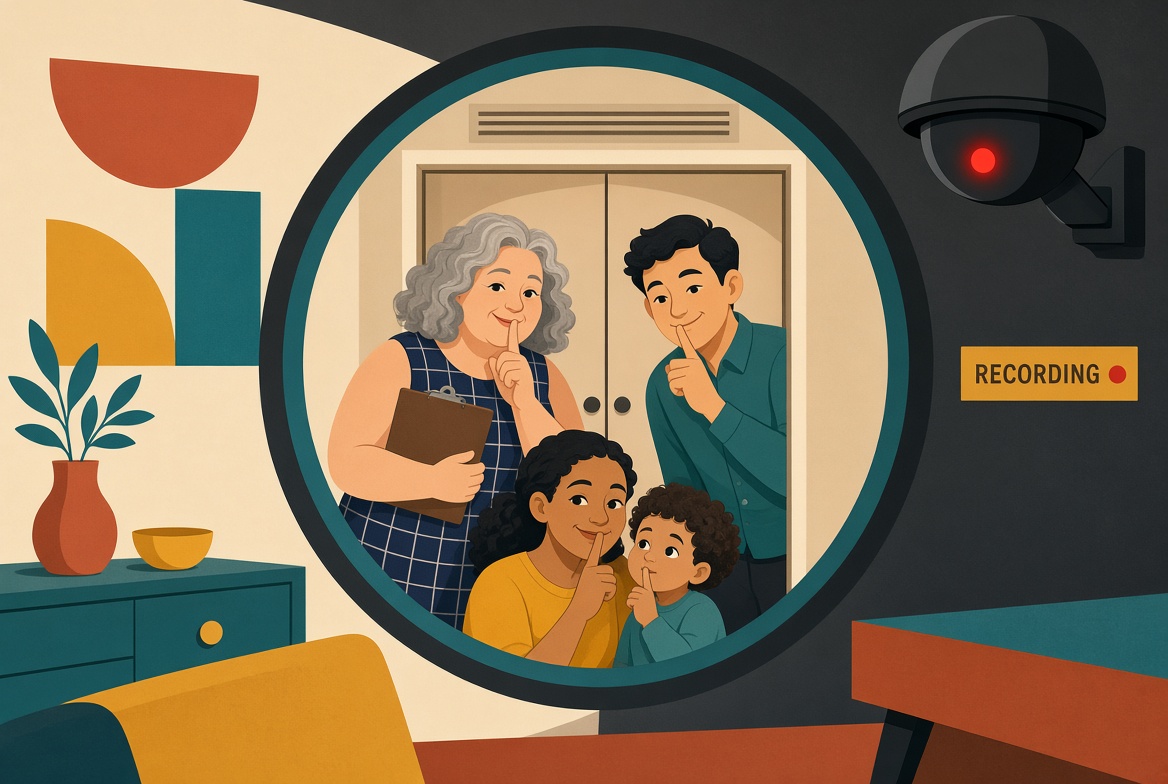
I can't remember the last home I walked with buyers that didn't have a doorbell camera watching us come up the driveway or a backyard camera catching every word by the pool. In the Valley it's just part of the showing now. Cameras are everywhere, and most of the time nobody thinks twice.
The problem is a lot of those devices aren't just recording video. They're picking up audio too. That changes everything.
According to LendingTree's June 2026 survey of 2,000 consumers (reported by Realtor.com), 72% of recent buyers said they saw or suspected a camera or microphone during a tour. Fifty-six percent of sellers admitted their recording devices were active during walkthroughs. Most said it was for protection. A meaningful minority admitted they were listening specifically to gauge buyer interest, hear what people liked or disliked, or even catch what the buyer's agent was saying about the house.
I get the impulse. If it were my house I'd want to know what people really thought too. But as someone who sits on both sides of the table, I've watched this create real problems for buyers and sellers in Phoenix, Scottsdale, and the East Valley.
Getting the law right in Arizona
Arizona is a one-party consent state. If you're part of the conversation, you can record it. Agents record their own calls. Buyers record their own walkthrough notes. No issue.
The wrinkle is remote listening. Under Arizona Revised Statutes Section 13-3005, it is a Class 5 felony to intercept a conversation you are not present for unless at least one person in that conversation has consented. A seller sitting at work or reviewing footage later through a doorbell camera or indoor hub is not a participant. That is not protected by one-party consent.
It doesn't matter if the seller is watching live or pulls the file three weeks later. A conversation recorded without consent is still legally exposed.
Best practice from Arizona real estate attorneys and educators, and what I tell my own seller clients: note any active audio/video devices in the MLS private remarks and put a clear sign at the property. Some MLS systems elsewhere already require a yes/no surveillance field. Disclosure protects the seller from claims and protects the buyer's agent from ever having to say "we had no idea."
I'm not an attorney. This is general information, not legal advice. If you have questions about your specific setup, talk to a real estate attorney.
My signature move
If you've toured with me, you've probably seen it: I point at a camera, then put a finger to my lips. It's automatic now.
Buyers talk. That's human. A throwaway joke about the wallpaper or the smell of the guest bath can stick with a seller when your offer lands. Sellers are people.
Worse is the negotiation leak. If my buyers start talking numbers, contingencies, or "we love it, whatever it takes" out loud, the seller just got handed leverage they didn't earn. I've watched sellers counter harder and faster after seeing that exact footage. A quiet, composed walkthrough protects your position the same way a strong pre-approval does.
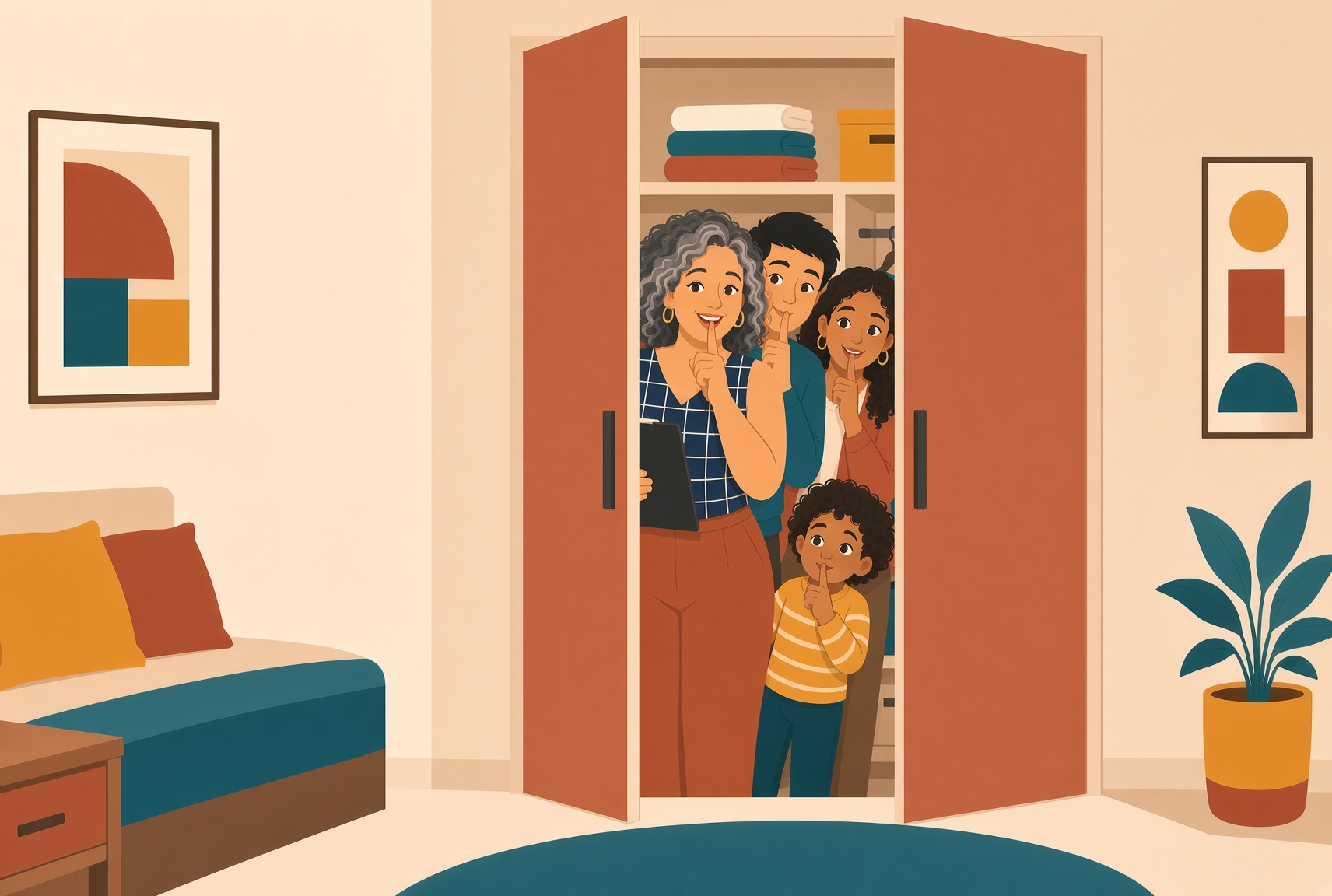
When something genuinely can't wait, a structural concern, a real pricing question, I've been known to herd everyone into the primary bedroom walk-in and shut the door. It looks ridiculous until you're standing in one. Then it makes perfect sense.
What it does to buyers
I've also watched the flip side. Some buyers get so camera-aware they won't open closets, won't look under sinks, won't really inspect the house they're supposed to be evaluating. They just want out. That's a loss. The whole point of a showing is to see the place, flaws and all.
What it does to sellers
Sellers aren't immune. I've heard the stories: buyers complaining about paint, mirrors, smells, closet size, all delivered live to the seller's phone. It stings, even when it's just normal buyer chatter.
LendingTree's data on the sellers who kept devices active is revealing: 82% went back and reviewed the footage, and close to half said what they heard influenced negotiations, repairs/staging, or pricing. A comment about the mirrors doesn't always stay a feeling, it sometimes becomes a decision.
I've watched my own sellers get worked up over minor remarks and then spill that frustration onto me. Watching your home get picked apart in real time is emotional. It can cloud judgment on both sides if nobody stays level.
Footage has also saved sellers from false damage claims. This isn't a call to rip every camera out. It's a call to be smart, transparent, and legal about how they're used.
My advice to buyers
Assume you're being recorded the second you pull into the driveway, video and possibly audio, live or saved. Modern doorbell cameras pick up clear conversation well past the front step, often into the driveway.
Bring a small notepad or use your phone notes. Write the real reactions and questions. We debrief once we're out of range, usually over coffee. Mum's the word until then.
Don't let the cameras stop you from actually looking at the house. Open the drawers. Check the closets. Inspect what you came to inspect. Quiet doesn't mean incomplete.
And the driveway debrief isn't safe either. That quick recap right outside the front door is often still in range. Wait until you're down the street or, better, save it for coffee. If your agent points at a camera and gives you the quiet sign, they're protecting your negotiating position, not being paranoid. Ask whether the listing discloses active surveillance. If it doesn't say either way, assume it might be there.
My advice to sellers
If you want honest, unguarded reactions, and you should, that's what gets offers written, consider disabling audio during scheduled showings, or at minimum disclose it clearly in the listing remarks and with a sign at the door. Ask your agent how your specific setup should be noted.
If you keep audio on, be prepared to hear things you don't love. It rarely kills a good offer, but it can sour a negotiation if you take it personally.
This comes down to the same question I always come back to with clients: where do you want to live, and how do you want to live? A home sale should feel like a real transaction built on trust, not a stakeout. A little awareness on both sides goes a long way.
Sources
This post draws on original reporting by Kimberly Dawn Neumann, "How Sellers Are Using Smart Cameras To Eavesdrop on Homebuyers," Realtor.com, July 31, 2026.
Survey data, including the 72%, 56%, and 82% figures, is from LendingTree's June 2026 survey of 2,000 U.S. consumers conducted with QuestionPro.
Arizona recording law information is drawn from Arizona Revised Statutes Section 13-3005.
Guidance on disclosing surveillance devices in Arizona listings is consistent with recommendations from Arizona real estate education providers such as Desert Sage Seminars.
This post is for general informational purposes only and is not legal advice. Consult a licensed Arizona real estate attorney for guidance on your specific situation.
DeDe Forwood, REALTOR® | HomeSmart
Helping buyers and sellers navigate the Valley of the Sun with honesty, patience, and zero manufactured urgency.
Let's TalkDeDe Forwood is a REALTOR® with HomeSmart, and this content follows the Fair Housing Act and the REALTOR® Code of Ethics. Nothing in this guide should be read as, or used for, steering based on race, color, religion, sex, national origin, familial status, or disability. Equal Housing Opportunity.